
Adult Supervision for Children: Children under 13 must be accompanied by an adult (18+). Adults are required to actively supervise children at all times, keeping inexperienced swimmers within arm’s reach. Flotation toys should not be relied upon for supervision.
Respectful Conduct: All swimmers are expected to maintain respectful conduct. Running, rough play, loud or abusive language, and inappropriate behavior are prohibited.
Pool Equipment and Breath-Holding Safety: For safety, please do not hang on lane lines, ladders, or other pool equipment. Underwater distance swimming or prolonged breath-holding is not permitted.
Hygiene and Cleanliness Policy: To ensure hygiene and cleanliness, no food or drink (except water) is allowed in the pool area. Glass or ceramic items are strictly prohibited.
Pet Policy: Pets are not allowed in the Sandusky Aquatic Center, with the exception of service animals.
Prohibited Items Policy: Weapons, alcohol, drugs, tobacco, and vapes are not permitted on the property. Violations of this policy will result in disciplinary action and potential legal involvement.
What is the new aquatic program at ECHD/ECCHC?
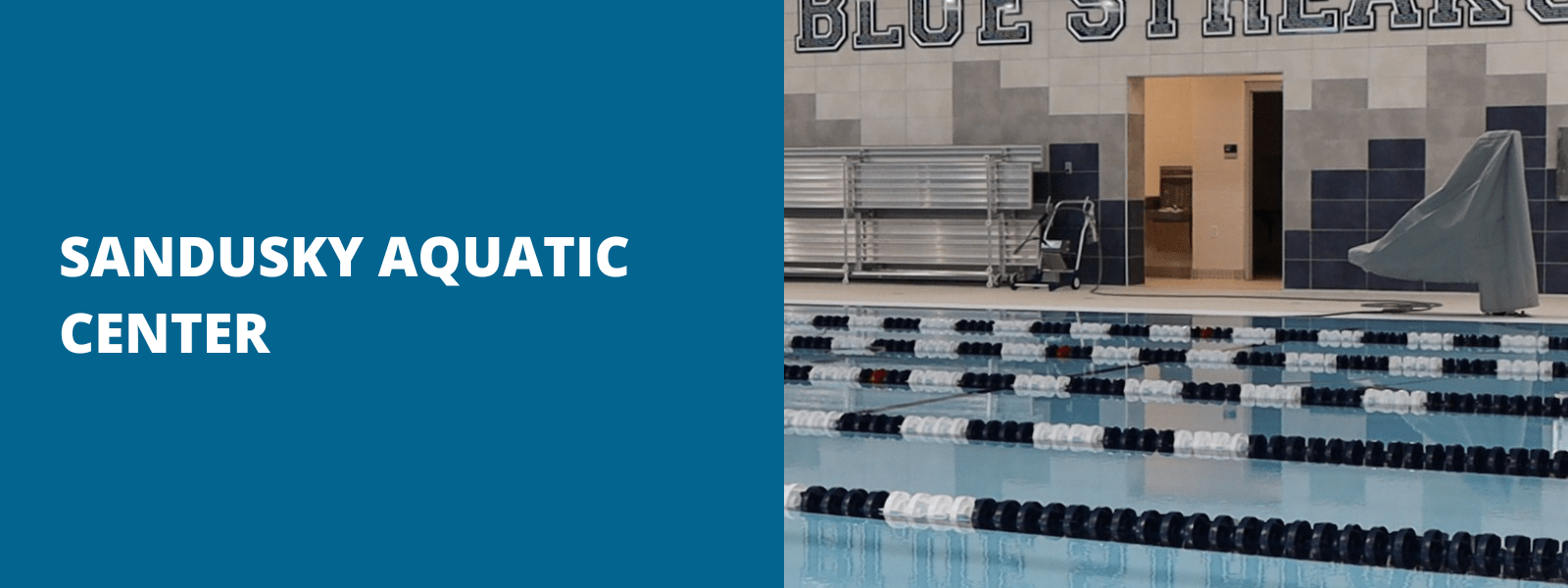
ECHD/ECCHC is excited to launch a new aquatic program, a joint venture with Sandusky City Schools, located at the Sandusky Aquatics Center within Sandusky High School! This program is designed to provide community members with access to the many benefits of water-based activities, including fitness, rehabilitation, and overall wellness. A detailed calendar of events, water classes, and open swim times is available on our Google Calendar.
How long is the pool?
The pool at the Sandusky Aquatics Center is 25 meters in length. For those interested in distance swimming, here’s how many laps (down and back) are needed:
Do I need to know how to swim to participate in the aquatic program?
Some level of water competency is needed to participate in many aspects of the aquatic program. Many exercises and therapies can be performed in shallow water or with flotation devices, focusing on movements and strengthening rather than swimming proficiency.
What is the lifeguard supervision policy?
Swimming is permitted only when a lifeguard is on duty. Lifeguards may conduct swim tests. Their decisions regarding safety and pool rules are final. Failure to comply with pool rules may result in removal from the premises.
What is the lifeguard to patron ratio and pool capacity?
The lifeguard ratio is 1:50. The pool’s capacity is 50 individuals with one guard on duty, and 100 individuals with two guards on duty.
What are the benefits of aquatic exercise and therapy?
Aquatic exercise offers numerous benefits, making it an ideal option for many individuals. Key advantages include:
Who can benefit from the aquatic program?
The aquatic program is suitable for a wide range of individuals, including those with:
Is this program considered aquatic therapy or general aquatic exercise?
The program is designed to offer a range of options, from general aquatic exercise for fitness and wellness to potentially more structured aquatic therapy programs. For specific therapeutic needs, it is recommended to consult with your healthcare provider or an ECHD/ECCHC professional.
What types of aquatic classes are offered?
Our aquatic program offers various classes to meet different needs and interests, including Water Zumba, open/lap swimming, and walking. Please check our schedule for specific class times and availability.
Will insurance cover aquatic therapy sessions?
Coverage for aquatic therapy can vary depending on your insurance provider and plan. It is recommended to contact your insurance company directly to inquire about coverage for aquatic therapy or related services.
How can I learn more about the program schedule and specific offerings?
Please stay tuned for more detailed information regarding the program schedule, specific classes, and registration details. You can check the ECHD/ECCHC website or contact us directly for the latest updates.